

Weekly Brief
Be first to read the latest tech news, Industry Leader's Insights, and CIO interviews of medium and large enterprises exclusively from The Manufacturing Outlook
The Manufacturing Outlook: Specials Magazine
In an interview with Manufacturing Outlook, Carlos Soto, Head of Americas Manufacturing at Teleflex, discusses the evolving demands of modern manufacturing leadership and shares how disciplined operating systems, people development and strategic alignment drive sustainable performance across a complex regional footprint. Carlos Soto serves as Head of Americas Manufacturing at Teleflex, overseeing multiple production facilities across the United States and Mexico. He is responsible for overall plant performance, operational health and the alignment of global strategy with regional execution. With experience spanning medical devices, pharmaceuticals, biologics manufacturing, private equity environments and public companies, he brings a systems-oriented perspective to operational leadership. His focus centers on safety, quality, delivery, cost and culture while building leadership capability from the shop floor upward. Roles and Responsibilities As Head of Manufacturing for the Americas, I am responsible for all manufacturing facilities within the region. That includes multiple sites in Mexico and the United States and ensuring alignment between regional execution and global strategy. A significant portion of my time is dedicated to ensuring our facilities perform at the level expected in a medical device organization. I do this by visiting sites regularly, engaging with plant leaders and spending time with teams on the floor. Being physically present helps me understand operational realities beyond dashboards and reports. I also focus on talent development and overall business health. Supporting my direct reports, identifying emerging leaders and ensuring strong succession plans across sites are key priorities. Manufacturing performance is deeply connected to leadership capability, so investing time in this area is essential.

What challenges arise when legacy hydraulic systems are no longer supported by original manufacturers? Rocky Mountain Hydrostatics (RMH) specializes in repairing and rebuilding legacy hydraulic systems across critical US military and commercial operations. Many of these systems are 20 to 30 years old and are no longer supported by their original manufacturers, leaving operators with a replacement timeline that can extend beyond a year and result in costly downtime. RMH reduces these lead times to weeks, restoring systems to OEM-level performance or better. “We restore hydraulic systems to equal or better performance than their original OEM specifications,” says Brock Wortham, vice president. Specialized Expertise Where OEM Support Ends How does RMH leverage specialized expertise to support legacy hydraulic systems across industries? RMH operates at the intersection of legacy system sustainment and advanced hydraulic engineering. Its primary market is the U.S. Navy, where it is certified by Naval Sea Systems Command (NAVSEA) to service approximately 30 major hydraulic assemblies on active vessels—equipment that powers critical shipboard operations, including steering, anchoring, cranes and elevators. This specialization is reinforced by a team that includes former Navy engineers, bringing first-hand operational knowledge of shipboard systems. Beyond component repair, RMH supports full-system optimization, including hydraulic controls, valve configurations, and PLC integration, positioning the company as an engineering partner rather than a conventional repair provider. The company is also expanding across industrial manufacturing, nuclear power, and oil and gas sectors, where aging hydraulic infrastructure and high replacement costs make repair and remanufacturing a strategic necessity..
Contract Manufacturing

What challenges require electrical systems to maintain consistent reliability in industrial operations? Weiser Engineering operates in environments where electrical power cannot be allowed to ‘almost fail.’ Industrial facilities rely on uninterrupted uptime to protect safety, production, and commitments, and the company makes electrical systems predictable under real operating conditions. The firm provides end-to-end electrical power engineering ownership, with senior engineers directly accountable from initial assessment through commissioning and long-term operation. How does an owner’s engineer model improve accountability across electrical system lifecycles? Rather than functioning as a traditional consultant, Weiser Engineering serves as the owner’s engineer, embedded in daily decision-making and responsible for how systems perform. This execution-first model has made the firm a long-term partner to industrial operators who cannot afford ambiguity in their power infrastructure. Across the industry, electrical reliability is undermined not by catastrophic failures, but by near-misses. Reactive maintenance, fragmented vendors, and late-stage problem solving leave engineers stretched thin and outages feeling inevitable. Weiser Engineering removes that uncertainty by owning system intent and performance before problems surface, turning electrical power infrastructure into a controlled, strategic asset. From the outset of every engagement, senior engineers remain hands-on. The firm does not hand projects off after studies or design packages. Responsibility extends through specification, procurement support, construction coordination, commissioning, and operational handover. Growth has followed this model naturally through repeat engagements rather than marketing-driven expansion. “We’re not focused on chasing volume,” explains Tim Weiser, president. “Clients rely on us because we stay accountable across the full life cycle of their facilities and that consistency builds trust.”
Top CNC Machining Services 2026
JEP Manufacturing
Eliminating Tradeoffs in Precision Machining Through Process Control
Felix Militcin, Director of Operations
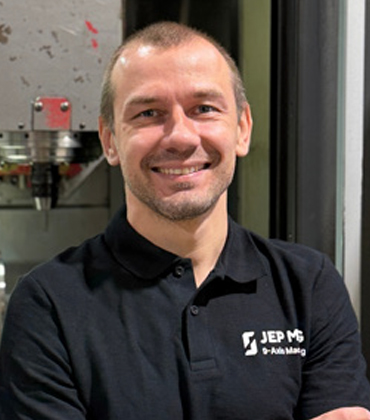
Manufacturers continue to face a persistent challenge in precision machining where quality, lead time and cost are often treated as competing priorities. Tight tolerances, complex geometries and evolving material requirements create pressure to deliver faster without compromising consistency. JEP Manufacturing addresses this challenge by structuring its processes to remove these tradeoffs. Built on advanced machining platforms and automation, it focuses on delivering repeatable results while maintaining agility. “Through our ability to execute complex, consolidated setups and apply automation and CNC tending robotics, we reduce overall machining time without compromising dimensional control,” says Felix Militcin, director of operations. Reducing Variability through Consolidated Machining A major source of inefficiency in machining environments is the reliance on multiple setups. Each transition introduces variability, increases cycle time and raises the risk of inconsistency across production runs. JEP Manufacturing addresses this by leveraging 9-axis mill-turn centers, multi-axis horizontal mills, and CNC tending robotics to consolidate operations. Fewer setups allow for tighter control over dimensional accuracy while reducing machining time.
Autonomous Mobile Robots Company of the Year 2026

Quasi Robotics builds Autonomous Mobile Robots (AMRs) that reduce repetitive material transport for enterprises in manufacturing, life sciences, and healthcare. Its Model C2 is a cart-style platform that moves goods autonomously for on-demand, point-of-use delivery, allowing teams to reclaim hours of lost time each shift while fitting seamlessly into existing workflows. Built for fast adoption, it combines low total cost with self-serve deployment, delivering software-driven automation that augments human workers and fits into existing workflows. What core shop-floor inefficiency does Quasi Robotics directly address with autonomous cart design? The company targets a universal shop-floor pain point of excessive walking. In work-in-process flows, repetitive station-to-station transport can cost roughly three hours per shift, pulling workers away from value-added work and breaking focus. Why does Quasi Robotics emphasize point-of-use delivery over pallet-based autonomous transport systems? Because the waste is driven by the sheer number of short handoffs, the right fix is point-of-use delivery rather than bulk pallet transport. Unlike pallet-moving AMRs optimized for large moves, Quasi Robotics supports human-proximate deliveries that keep manufacturing cells supplied exactly when needed.
Top Contract Manufacturing Services Provider 2026
What role does on-site execution play in maintaining manufacturing continuity across disrupted supply chains? Global manufacturing continues to face disruption, with reduced on-ground presence shifting supplier visibility and coordination toward localized, on-site execution. As these dynamics evolve, BaySource, a contract manufacturing consultancy, engages directly with factories on behalf of its clients, overseeing relationships and execution to ensure production continuity across existing products, new developments and brand extensions. Direct communication with suppliers remains central, with the firm operating as a consultant rather than a broker. Unlike brokers who operate on commission or markup, BaySource works as a fee-based consultant, removing pricing opacity and enabling direct client-factory engagement with full visibility into costs and processes. “We become the client’s face on the ground, ensuring factories meet quality, capacity and timelines, while keeping supply chains uninterrupted despite travel restrictions or global disruptions,” says David Alexander, CEO. Navigating Shifts in Supply Chain Dynamics How has supply chain disruption changed supplier oversight and manufacturing coordination requirements? Between 2020 and 2026, manufacturing strategies shifted significantly. Tariffs increased costs and pushed companies to rethink sourcing decisions, while fewer client-side teams remained on-site, increasing the need for continuous supplier oversight. BaySource responds through direct involvement in day-to-day operations. Rather than changing its model, the company has maintained a consistent on-the-ground supplier engagement approach to ensure continuity. The team works with factories to align timelines, quality standards and technical requirements with client expectations, reducing production delays and minimizing execution risk.
Manufacturing Packaging

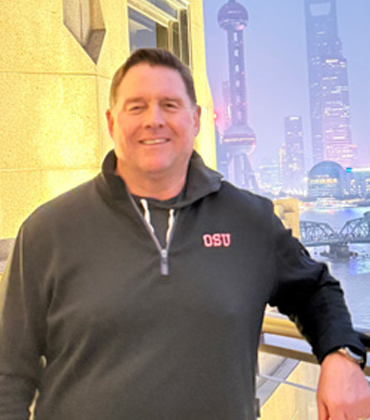
Leveraging Technology to Track Returnable Shipping Containers
Bridget Grewal, Director of Packaging Continuous Improvement, Magna International [NYSE:MGA]
Contract Manufacturing

Adaptability In Contract Manufacturing
Rick Alden, Director Contract Manufacturing, Ajinomoto Foods North America
Manufacturing Consulting
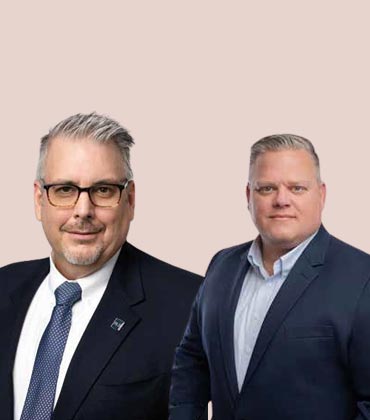
Strategies for Building a More Sustainable Manufacturing Plant
Steven Strobel, Head of Industrial, Manufacturing & Logistics and Aaron Woodward, Principal - Head of Sustainability, Rider Levett Bucknall RLB
Wire and Cable
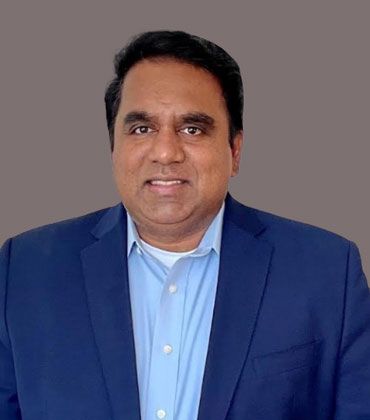
Transforming Advanced Manufacturing through Technology
Leo Antony, Vice President - Advanced Technology, Kymera International
Chemical Manufacturing

The Convergence of IT with the Internet of Things Innovation
Andy Shang, Vice President of Engineering, Gold Medal Products
Contract Manufacturing

Modernizing the Grid Isn't Optional-It's Inevitable
Rick Joyce, Vice President of Business Development - Grid Modernization, Mitsubishi Electric Power Products, Inc
Chemical Manufacturing
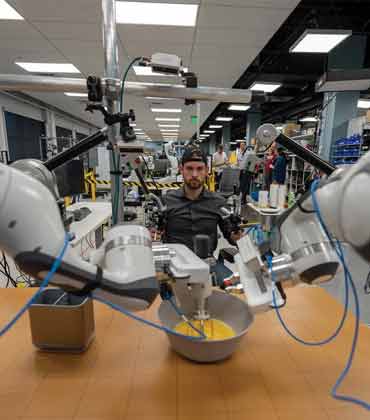
Robotics and Revolutionizing Technology
Yongyao (Max) Cai, Director of Engineering, Lighting and Precision Connectivity, TE Connectivity

IN MY OPINION
Material Handling Equipment
Working Through People to Optimize Performance
Fadi Safieddine, Maintenance Manager, Westlake Pipe & Fittings

LAST WORD
Industrial Automation
How Data and Discipline Shape the Way I Lead
Thiago Jube, Process Technology Manager, Barry Callebaut Group
IN FOCUS

Power System Innovation: Engineering Design And Consulting Services
Electrical power engineering design and consulting services enhance system reliability, support integration, optimize performance, and enable resilient, efficient energy infrastructure development.

The Growing Impact of Advanced Hydraulic Repair Solutions on Industrial Equipment Reliability
Digital sensors, predictive analytics, and cloud monitoring enable early fault detection, remote diagnostics, and smarter hydraulic repairs, improving equipment reliability.
EDITORIAL
Redefining Performance Through Execution
Manufacturing today is defined by execution discipline, system visibility and the ability to translate strategy into consistent operational outcomes. This edition of Manufacturing Outlook examines how organizations are strengthening performance through structured processes, engineering accountability and data-driven decision-making.
Our cover story, Teleflex, recognized as the Manufacturing Leader of the Year 2026, reflects this shift through a leadership model grounded in operational discipline and people development. Carlos Soto emphasizes that manufacturing excellence is achieved by aligning daily execution with strategic priorities across safety, delivery and culture. Through tiered accountability systems, real-time data visibility and strong shop-floor engagement, Teleflex has built a resilient operating model that scales across facilities while maintaining consistency.
Rocky Mountain Hydrostatics, recognized as the Top Hydraulic Repair Services 2026, addresses a critical gap in legacy system sustainment. By restoring aging hydraulic systems to OEM-level performance within weeks rather than extended replacement cycles, the company enables continuity across defense and industrial operations through engineering-led repair models and rapid field response.
Similarly, Weiser Engineering, recognized as Top Electrical Power Engineering Design and Consulting Services 2026, redefines electrical reliability through an owner’s engineer model. Its end-to-end accountability, from design through commissioning, eliminates execution gaps and ensures long-term system performance in uptime-critical environments.
From a leadership perspective, Rick Joyce, Vice President of Business Development - Grid Modernization at Mitsubishi Electric Power Products, highlights that digitalization, interoperability and real-time system visibility are now central to scaling infrastructure and managing complexity. Bridget Grewal, Director of Packaging Continuous Improvement at Magna International, reinforces this through her focus on cost-effective tracking technologies such as RFID, BLE and LPWA, which enable real-time visibility and control of high-value returnable assets across supply chains.
Together, these ideas reinforce that disciplined systems, engineering ownership and operational clarity drive manufacturing performance. We invite readers to explore this edition and examine how these principles are shaping the next phase of industrial execution.
