
Weekly Brief
Be first to read the latest tech news, Industry Leader's Insights, and CIO interviews of medium and large enterprises exclusively from The Manufacturing Outlook
The Manufacturing Outlook: Specials Magazine
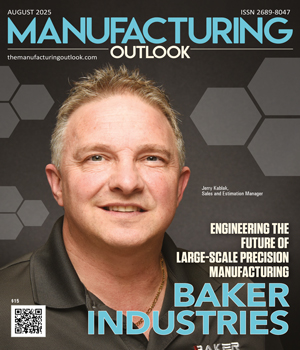
Precision, speed and reliability aren’t just goals; they’re non-negotiables in high-stakes industries like aerospace, defense, and automotive. Manufacturers are constantly racing against the clock to deliver complex parts, often in high volumes, without compromising quality. But when traditional processes hit a wall—whether it’s due to outdated tooling, lead time bottlenecks, or design constraints—Baker Industries, a Lincoln Electric company, is the one to call. The company merges cutting-edge machining and fabrication with next-generation large-scale metal additive manufacturing/3D printing (AM) to deliver fast, flexible and precise solutions that meet production demands and drive innovation. In one instance, the U.S. Army Corps of Engineers needed to replace a failing, pre-World War II component critical to the operation of the Soo Locks—a vital trade link connecting Lake Superior to the rest of the Great Lakes. The original casting process would’ve taken 18 months. Yet, Baker Industries engineered and delivered the part in just 12 weeks, using a combination of AM, fabrication, and machining, avoiding a potentially massive disruption in GDP. This instance exemplifies just how far the company’s capabilities can go under pressure. From its origins as a small, family-run shop in the early 90s, Baker Industries has focused on continuous improvement to bring more value to clients. The company built its name on five-axis machining long before it became standard across the Midwest. From there, it has evolved to use a hybrid of machining, fabrication, and AM to create practical solutions for problems, as seen with the Soo Locks. The move into AM was about increasing speed and flexibility in solving high-stakes problems. In the early 2010s, powder bed fusion and thermoplastic AM capabilities were added to the list, and more recently, the company installed two of Lincoln Electric’s proprietary SculptPrint™ 1500 robotic wire-arc additive manufacturing (WAAM) systems. These capabilities allow engineers to easily select the best manufacturing process for their project from a single supplier. “We’re here to solve problems with all the tools at our disposal,” says Jerry Kablak, sales and estimation manager. “That means being willing to rethink everything, including how fast we can get something done.”
Material Handling Equipment
Cambelt International
Bringing Monolithic-Molded Advantage In Bulk Material Handling
Justin Barker, Executive Vice President of Sales & Marketing
In industries like mining, agriculture, energy, and construction—where downtime means lost revenue—bulk material handling systems must be as rugged as their environments. For more than six decades, Cambelt International has been rewriting the rules of conveyor design. Based in Salt Lake City, Utah, the company doesn’t just build conveyors—it engineers complete, belt-based conveying solutions tailored to meet real-world demands. Its defining edge lies in its engineering-first mindset, vertical integration, and perhaps most importantly, its unique, belt-first approach. With a proprietary manufacturing process unmatched in the U.S. market, Cambelt has distinguished itself as more than a manufacturer. It’s a long-term partner trusted by clients to deliver durable, cost-effective solutions that perform reliably year after year. A Belt Like No Other: Vulcanized to Perform The heart of Cambelt’s innovation lies in the one component many companies overlook: the belt itself. While most conveyor manufacturers source belts from third-party suppliers and retrofit their machines around those components, Cambelt is the only U.S. manufacturer designing, engineering, and fabricating one-piece rubber conveyor belts in-house. Using a proprietary vulcanization process, Cambelt bonds cleats and sidewalls directly into the belt body— without adhesives, glue, or mechanical fasteners. The result is a homogeneous, seamless structure that virtually eliminates delamination and drastically reduces maintenance costs. “We’ve had belts like the CAMFLEX 3015 move over two billion pounds of Frac sand in less than a year,” says Justin Barker, Executive Vice President of Sales & Marketing. “Our belts can unload a 40-ton truck in seven minutes. In the most demanding environments, they’re outlasting the competition by 3x—and that’s not just a claim, it’s backed by real-world data.” Case in point: One long-time Cambelt customer has been running the same belt on a CWR 4245- 6R system for 10 years straight—where previous belts needed replacement after just 3.5 years. The result? Less downtime, fewer replacements, and a significantly lower cost of ownership.

Industrial Molding
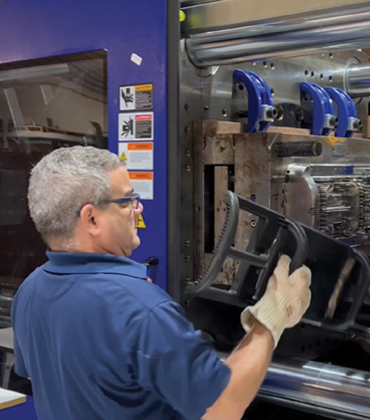
Every flawless plastic component tells a story of engineering discipline, material mastery and seamless execution. In industries where consistency and speed can make or break a product line, behind-the-scenes manufacturers play a pivotal role in shaping success. Allied General Industries LLC is that partner, powering supply chains with precision-driven plastic injection molding that leaves no room for error. Built on 50 years of expertise and experience, Allied has helped companies across North America turn ideas into tangible, production-ready components. The company offers custom-engineered solutions, developing and building specialized assembly equipment in close collaboration with clients to meet high-volume production goals. With advanced tools like multi-cavity molds, it delivers high-volume, defect-free parts at competitive costs, all backed by expert craftsmanship, strict quality control, and full compliance with all required permits and local regulations. “Clients are at the heart of what we do. We take the time to understand their vision, treat each project as one-of-a- kind and go the extra mile to help them succeed,” says Luiz Gastaldo Filho, product development. Allied supports a diverse clientele, including mid-to-large medical, defense, consumer goods and automotive companies across the U.S., Canada and Latin America. It also supports new ventures and startups throughout the process, from initial sketches to fully realized in-house mold design. Backed by a highly experienced in-house team, the company meticulously oversees mold adjustments and production setup, ensuring every detail meets the highest standards. Over the past decade, Allied replaced its legacy machines with a cutting-edge fleet of brand-new injection molding machines ranging from 120 to 780 tons. These machines produce components ranging from as small as one gram to as large as four feet long and six pounds. They can now scale production from thousands to millions of units and have even manufactured over 50 million parts for a single client. This advanced manufacturing capability enables the company to focus on producing various plastic components for clients, either using existing molds or creating new ones. If a client already has molds, the process is even faster: Allied simply transfers them to its facility in Pembroke Pines and begins manufacturing right away. In addition, its 70,000-square-foot facility features ample storage capacity for up to 3,000 pallets, giving clients the convenience of storing their finished products and arranging shipments as needed.
Industrial Automation
Accelerating Innovation with Additive Manufacturing: Breakthroughs Achieved in Weeks
Yohann Rousselet, Global Director, Technology Innovation, Baltimore Aircoil Company
Fabrication

Redefining the Automotive Sector with Innovative Manufacturing Systems
Trent Randles, Engineering Manager, BorgWarner
Composite

Driving Holistic Sustainable Packaging Solutions
Martin Rathgeber, Director of Engineering, Berlin Packaging
Industrial Automation

Lean Trends: Navigating Business Requirement Challenges
Juan Carrera, SVP Global Operations and Operational Excellence, Flowserve Corporation [NYSE: FLS]
Material Handling Equipment

Lean Manufacturing Excellence
Terrence H. Slaughter, Plant Production Manager, Toyota North America

IN MY OPINION
Industrial Equipment
How To Make The Most Of Your Process Failure Mode And Effects Analysis
Monte Heisler, Director, Manufacturing Quality, North American Stamping Group

LAST WORD
Industrial Supplier and Distributor
Evolving Manufacturing: The Strategic Role of Industrial Fastener Distribution
Blake Ritter, Branded Products Segment Manager, Lincoln Industries
IN FOCUS
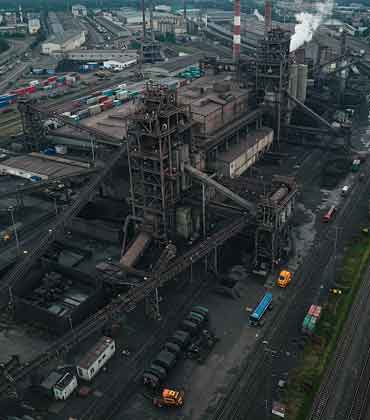
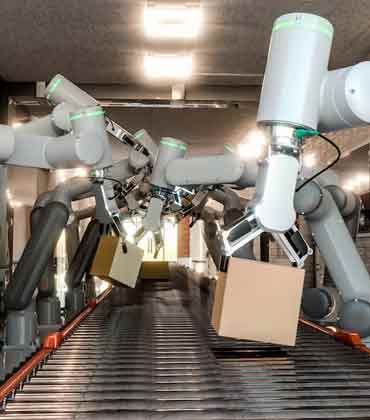
The Conveyor Belt as a Catalyst for Industrial Progress
Conveyor belts are crucial for modern manufacturing, driving innovation through technology, automation, and sustainability, while experiencing robust market growth and increased demand for advanced solutions.
EDITORIAL
The New Industrial Pillars
The manufacturing sector is advancing toward smarter production, stronger supply chains and faster innovation. Adaptability, intelligence and precision define excellence in this evolving landscape. Largescale fabrication, conveyor systems and plastic injection mold parts are emerging as key drivers of industrial performance, supporting diverse sectors such as automotive, electronics, aerospace, food and logistics.
Leading manufacturers are adopting digital twins, CNC precision systems, robotic fabrication and automated assembly lines to build complex structures with repeatable accuracy. They balance volume with flexibility, delivering both high throughput and low-batch customization.
Plastic injection mold parts manufacturing has evolved from basic part supply to an innovation partnership. Its role now extends into design, R&D and global product development. With expertise in micro-molding, multi-shot processes and high-performance resins, it provides more than dimensional accuracy and enables next-generation functionality.
Efficient material flow is also essential to leaner, safer operations, making conveyor belt manufacturing a critical player. From antimicrobial belts in food processing to fire-resistant systems in heavy industry, organizations are turning to smart conveyor solutions equipped with IoT sensors, predictive maintenance and automation to reduce downtime and boost throughput.
This edition of Manufacturing Outlook explores how the three pillars of precision parts, intelligent motion and scalable production are shaping the next era of industrial evolution.
Featured thought leaders include Yohann Rousselet, global director, technology innovation at Baltimore Aircoil Company, who emphasizes that rapid, iterative prototyping with additive manufacturing is essential for controlling quality, reducing lead times and managing costs. Blake Ritter, Branded Products Segment Manager at Lincoln Industries, highlights the value of choosing environmentally friendly fasteners, viewing sustainability as both a practical and responsible approach to modern manufacturing.
We hope this edition sparks fresh perspectives and drives purposeful innovation toward a more resilient and agile industrial future.
