
Weekly Brief
Be first to read the latest tech news, Industry Leader's Insights, and CIO interviews of medium and large enterprises exclusively from The Manufacturing Outlook
The Manufacturing Outlook: Specials Magazine
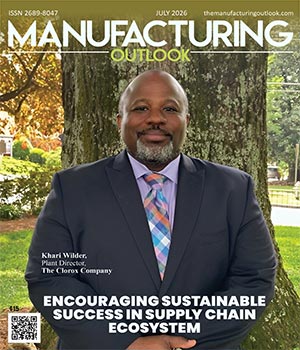
Khari Wilder, an executive at The Clorox Company, implemented the supply chain excellence on a global scale. His strategic coaching extends to general managers, supply chain leaders and directors of manufacturing within these business units. Khari brings a wealth of expertise in total productive maintenance (TPM) pillars, process engineering, quality management and supply chain optimization. His seamless integration of these elements ensures a harmonious and efficient supply chain ecosystem. In an exclusive interview with Manufacturing Outlook, Khari Wilder shares his valuable insights on encouraging continuous improvement and sustainable success across the organization. As the director of global manufacturing excellence at The Clorox Company, could you describe your key roles and responsibilities? My team and I are responsible for coaching supply chain leaders at the company's various locations in the U.S., as well as all manufacturing sites worldwide. On a daily basis, we coach VPs, directors and managers on how to effectively implement operational excellence using the methodology chosen by the company. My day-to-day responsibilities involve ensuring that we, as coaches, are effective in our roles. I also oversee that all Business Unit (BU) supply chain squads and manufacturing sites are progressing at the necessary pace to deliver the excellent results the business requires. What are some of the most recent challenges or trends you have observed in the manufacturing industry?
Industrial Equipment
The first thing employees do when a Big Ass Fan powers on inside a warehouse is pause - for a good reason. It’s not because something is wrong, but because the change is immediate and refreshing. The air begins to move, cutting through the heavy heat that’s been sitting in the space for hours. Workers naturally walk underneath the large steady blades, lifting their arms and looking up as the cool airflow reaches them. In warehouses where summer temperatures regularly climb into the 90s, that moment brings instant relief. The space feels more comfortable, energy levels pick up, and employees can get back to work feeling cooler, more focused, and ready to stay productive throughout the day. For decades, airflow was treated as an afterthought in industrial environments, secondary to production targets, machinery, and logistics. Heat was simply accepted as part of the job. But Big Ass Fans built an entire business by challenging that assumption and proving that airflow directly impacts productivity, employee retention, safety, and operational performance. Today, the Kentucky-based company supplies high-performance airflow solutions for more than 80 percent of Fortune 500 companies, turning what once sounded like an unconventional industrial idea into a global business strategy..

Material Handling Equipment

In industries like mining, agriculture, energy, and construction—where downtime means lost revenue—bulk material handling systems must be as rugged as their environments. For more than six decades, Cambelt International has been rewriting the rules of conveyor design. Based in Salt Lake City, Utah, the company doesn’t just build conveyors—it engineers complete, belt-based conveying solutions tailored to meet real-world demands. Its defining edge lies in its engineering-first mindset, vertical integration, and perhaps most importantly, its unique, belt-first approach. With a proprietary manufacturing process unmatched in the U.S. market, Cambelt has distinguished itself as more than a manufacturer. It’s a long-term partner trusted by clients to deliver durable, cost-effective solutions that perform reliably year after year. A Belt Like No Other: Vulcanized to Perform The heart of Cambelt’s innovation lies in the one component many companies overlook: the belt itself. While most conveyor manufacturers source belts from third-party suppliers and retrofit their machines around those components, Cambelt is the only U.S. manufacturer designing, engineering, and fabricating one-piece rubber conveyor belts in-house. Using a proprietary vulcanization process, Cambelt bonds cleats and sidewalls directly into the belt body— without adhesives, glue, or mechanical fasteners. The result is a homogeneous, seamless structure that virtually eliminates delamination and drastically reduces maintenance costs. “We’ve had belts like the CAMFLEX 3015 move over two billion pounds of Frac sand in less than a year,” says Justin Barker, Executive Vice President of Sales & Marketing. “Our belts can unload a 40-ton truck in seven minutes. In the most demanding environments, they’re outlasting the competition by 3x—and that’s not just a claim, it’s backed by real-world data.” Case in point: One long-time Cambelt customer has been running the same belt on a CWR 4245- 6R system for 10 years straight—where previous belts needed replacement after just 3.5 years. The result? Less downtime, fewer replacements, and a significantly lower cost of ownership.
Fabrication
AstenJohnson
Engineering Fabric Performance through Material Expertise and Industry Partnership
Elaine Reed, Digital Marketing Manager
Manufacturers in the pulp and paper industry continue to face mounting pressure to improve machine efficiency, reduce waste and maintain consistent product quality while operating in an increasingly competitive market. AstenJohnson approaches those challenges through a combination of material science expertise, application knowledge and close collaboration with customers across industrial fabric and filament applications. “The biggest differentiator is the depth and breadth of AstenJohnson’s knowledge and expertise,” says Elaine Reed, digital marketing manager. This expertise has been built over decades across equipment design, fabric manufacturing, materials engineering and machine performance. Many of the company’s leaders and technical teams have more than thirty years of experience working across paper machine applications and industrial markets. Customers often rely on AstenJohnson not only for products, but also for guidance on selecting the right fabric design for specific operating conditions. It also maintains direct control over much of its filament production process. By manufacturing many of the monofilaments used in its own products, AstenJohnson can integrate feedback between resin development, yarn production and fabric design in real time. That level of coordination allows development teams to respond more quickly to customer requirements while improving consistency across manufacturing and performance outcomes.
Chemical Manufacturing

3D Printing is Evolving from a Niche Process to High-Volume Manufacturing Technology
Alex Sant'Anna, Vice President Americas, Coating & Adhesive Resins, Evonik
Metal Working

Large-Format Metal AM Coming of Age
D. Mark Douglass, Business Development Manager, Additive Solutions, Lincoln Electric [NASDAQ: LECO]
Contract Manufacturing

Doubling Down on Operations: Sustainability to Meet Organization Goals
Kevin Brown, Senior Vice President Global Operations, Milliken & Company
Metal Working

Exploring the Future of Automobile Industry
Terrance H. Slaughter, Plant Production Manager, Toyota North America
Industrial Automation

Automation, Connectivity, and Sustainability Driving Multidisciplinary Organizations
Marcelo Varreira, Manufacturing Engineering Director - North America, Electrolux

IN MY OPINION
Material Handling
Making Agile Manufacturing Stick
Larry Saidman, Chief Technologist -R&D, Nordson [NASDAQ:NDSN]

LAST WORD
Composite
Driving Holistic Sustainable Packaging Solutions
Martin Rathgeber, Director of Engineering, Berlin Packaging
IN FOCUS
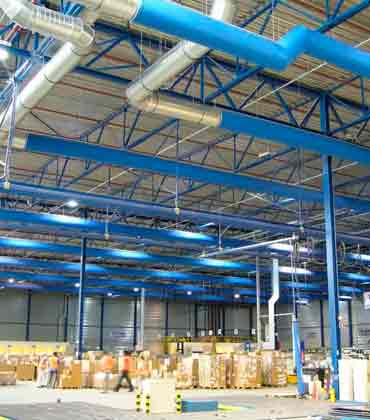
HVLS Fans Manufacturing: Powering Efficient Air Circulation Solutions
HVLS fans manufacturers deliver energy-efficient, customizable, and smart ventilation solutions, overcoming operational challenges while driving innovation, sustainability, and stakeholder value.
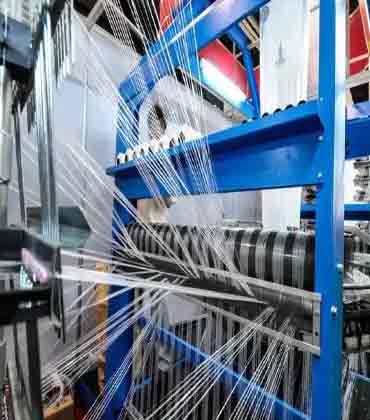
Fabrics and Filaments: Engineering the Future of Modern Textiles
Fabrics and filaments manufacturers drive material innovation, performance, sustainability, and advanced production across diverse global industries.
EDITORIAL
Engineering Better Performance from the Ground Up
Manufacturing leaders today are balancing a complex set of priorities that extend well beyond production output. Workforce retention, operational efficiency, sustainability and digital transformation have become interconnected business objectives, requiring organizations to rethink how facilities are designed, managed and optimized. In this edition of Manufacturing Outlook, we explore the technologies and leadership strategies helping manufacturers create more productive, resilient and future-ready operations.
Big Ass Fans, recognized as the HVLS Fans Manufacturing Company of the Year 2026, exemplifies this shift. The company has transformed airflow from a facility consideration into a measurable business strategy by connecting it directly to productivity, employee comfort, energy efficiency and workplace safety. By designing tailored high-volume, low-speed fan systems for each facility, the company is enabling manufacturers and logistics providers to solve operational issues and create an improved working experience for their employees. By framing airflow as a driver of business performance, Big Ass Fans has redefined how industrial environments approach facility optimization.
This issue also features perspectives from industry leaders. Terrance H. Slaughter, Plant Production Manager at Toyota North America, highlights the growing importance of workforce development, employee retention and electrification as key forces shaping the future of manufacturing and mobility. His perspective underscores the critical role of leadership, education and inclusive workplace cultures in building resilient manufacturing organizations.
Meanwhile, Larry Saidman, Chief Technologist – R&D at Nordson, explores how agile manufacturing is moving from aspiration to execution through the convergence of robotics, automation, advanced adhesives and machine-to-machine connectivity. He highlights the importance of collaboration across the manufacturing ecosystem to improve speed, flexibility and product performance. Together, their insights reinforce the importance of combining technological advancement with investment in people and processes.
The organizations and leaders recognized in this edition demonstrate that manufacturing excellence increasingly depends on connecting operational performance with workforce engagement, innovation and adaptability. We invite our readers to explore these perspectives and discover how manufacturers are building the foundations for long-term growth, competitiveness and operational excellence.
